

Building Strong Impressions Through Landscape Design: How The Huckleberry Way Enhances Curb Appeal and Property Value
Strong first impressions for homes and businesses begin long before a visitor steps inside; landscape design shapes perception, communicates care, and directly affects curb appeal and property value. This article explains how intentional landscape choices—from entry framing to lighting, plant palettes, and hardscape—create measurable interest from buyers and visitors, reduce maintenance burdens, and support efficient goals. Readers will learn practical curb-appeal strategies for residential properties, the commercial benefits of well-designed grounds, the strategic and smart technologies shaping 2025 designs, and a clear process for achieving results efficiently. The guidance emphasizes local Georgia considerations like native and drought-tolerant selections, smart irrigation, and efficient execution to deliver on-time projects that perform in Marietta-area climates. Throughout, we illustrate methods, provide comparison tables for design elements and plant choices, and describe the Huckleberry Way process so property owners understand outcomes and next steps.
How Does Landscape Design Improve Residential Curb Appeal and Property Value?
Landscape design improves residential curb appeal by organizing visual hierarchy at the property edge, guiding sightlines, and signaling quality maintenance—factors that increase buyer interest and perceived value. The mechanism combines hardscape cues (clean paths, orderly patios), layered softscaping (structure, seasonal interest), and functional systems (irrigation, lighting) so a home reads as cared-for and longer-lasting. The specific benefit is higher market competitiveness: properties with coherent design elements attract more prospective buyers and often command stronger offers. Below are practical, high-impact ideas homeowners can implement to raise curb appeal and reduce long-term upkeep.
This section compares common design element categories so owners can weigh impact against maintenance and budget.
What Are Effective Curb Appeal Landscaping Ideas for Homes?
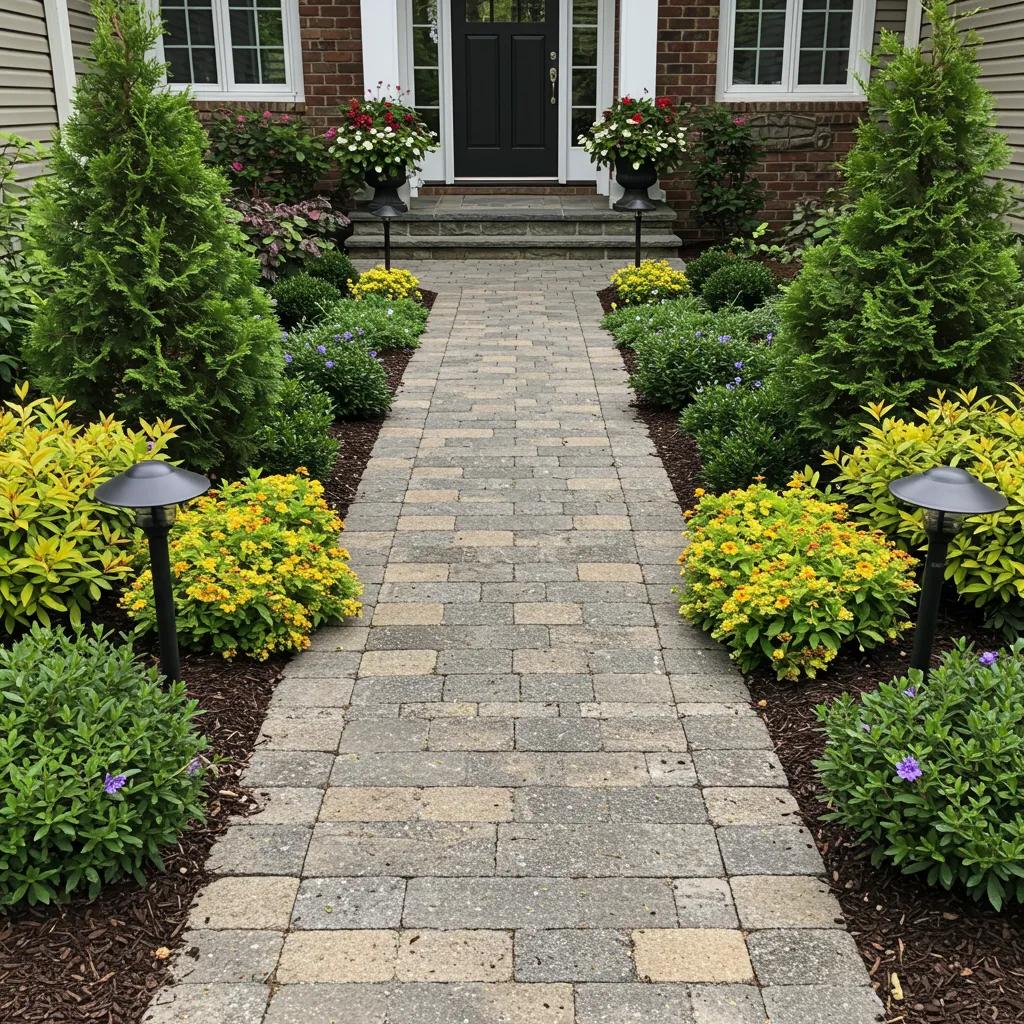
Effective curb-appeal ideas focus on the arrival sequence and low-maintenance longevity to keep costs predictable and appearance consistent. Start by framing the entry: a clear, well-lit path and trimmed foundation plantings create immediate order and balance. Layer plantings using a mix of structural evergreens and seasonal accent plants to ensure interest across seasons while minimizing intensive care. Use mulch and defined beds to reduce weeds and present crisp edges that read as professional workmanship. Add low-voltage or LED lighting to showcase the pathway and façade; lighting both enhances safety and elevates perceived value during evening viewings.
- Frame the entry: Define the path and door with symmetrical plantings and a clear surface.
- Layer plants: Combine evergreen structure with seasonal accents for year-round appeal.
- Use mulch and clean edges: Reduce maintenance and strengthen visual contrast.
- Add thoughtful lighting: Improve safety and highlight architectural features.
These targeted improvements are cost-effective ways to boost buyer interest while keeping upkeep predictable and manageable.
Research indicates that quantifying curb appeal can significantly influence a home’s market value.
Quantifying Curb Appeal: A Learning-Based Approach for Home Value
Quantifying curb appeal. This work explores learning-based methods for quantifying the curb appeal of the home, which would likely increase its sale price.
Quantifying curb appeal, Z Bessinger, 2016
How Can Smart Landscape Design Boost Your Home’s Market Value?
Smart landscape design increases market value by reducing perceived future maintenance and by expanding usable outdoor living areas that buyers want. Systems such as weather-adaptive irrigation and targeted drip lines conserve water and cut monthly bills, which appeals to cost-conscious buyers; durable hardscapes like paver patios and well-drained paths reduce long-term repair needs. Thoughtful design that creates functional outdoor rooms—intimate seating, clear circulation, and privacy—extends living space without structural additions, often producing disproportionate buyer enthusiasm. Recent trends show buyers value efficiency, low-maintenance palettes, and smart irrigation integration when evaluating properties, all of which make a home more marketable.
- Smart irrigation: Reduces water waste and lowers maintenance labor.
- Durable hardscape: Signal longevity and reduce future repair costs.
- Outdoor living expansion: Adds perceived square footage and lifestyle appeal.
These features combine to make properties both easier to maintain and more attractive to prospective buyers.
Developing accessible learning resources can empower homeowners to enhance their property’s appeal.
Landscaping Design for Home Curb Appeal: An Online Learning Approach
Online course development to support adult learning of landscaping design principles to improve the curb appeal of a home. Strategies can be used to recruit participants, particularly participants that are part of the target audience for the course. Strategies should be focused on the target audience of.
Online course development to support adult learning of landscaping design principles to improve the curb appeal of a home, 2020
What Are the Key Benefits of Commercial Landscape Design for Business Success?
Commercial landscape design acts as a visual extension of a company’s brand, influencing client perceptions, tenant satisfaction, and operational costs. The mechanism ties spatial organization, pedestrian flow, signage framing, and maintenance standards to visitor impressions of professionalism and management quality. Well-executed commercial landscapes can increase client foot traffic, improve employee morale, and support tenant retention by creating welcoming arrival experiences and functional outdoor spaces. Organizations also gain from reduced utility costs and maintenance demands when designs integrate smart plant palettes and efficient irrigation, translating design choices into operational savings and measurable business value.
Below are core commercial benefits and practical design focus areas.
How Does Landscape Design Enhance Brand Image and Client Attraction?
Landscape choices communicate a company’s values before any interaction occurs, with materials, planting quality, and maintenance signaling attention to detail and reliability. Strategic framing of signage and reception areas cultivates brand recognition, while reception plazas and sheltered outdoor seating create opportunities for informal client meetings and events. Planting selection, when tied to a consistent palette, reinforces identity and offers low-maintenance options that suggest responsible stewardship. Maintenance frequency and visible care levels also influence perceptions of management quality, turning landscape upkeep into a subtle yet powerful brand ambassador.
- Frame signage and entrances: Increase brand recognition and wayfinding clarity.
- Create client-facing outdoor areas: Support meetings and events outside the building.
- Maintain visible care: Signal stewardship and operational reliability.
These tactics translate landscape decisions into measurable gains in client comfort and brand perception.
The visual appeal of a property, often referred to as curb appeal, has a direct correlation with its perceived value, even in commercial settings.
What Strategic Landscaping Solutions Support Corporate Responsibility?

Strategic landscaping reduces resource use and demonstrates corporate responsibility through strategies like native plantings, stormwater management, and pollinator-friendly zones. Native and drought-tolerant plants cut irrigation needs and maintenance frequency while supporting local biodiversity—benefits that can be communicated in reporting and marketing. Implementing smart irrigation, bioswales, and rain gardens helps manage runoff and aligns with municipal stormwater goals, often improving compliance and lowering long-term costs. These measures provide both environmental benefits and public relations value, reinforcing a business’s commitment to efficiency.
- Native plantings reduce watering and support local ecosystems.
- Smart irrigation and rain gardens manage runoff and lower water bills.
- Pollinator corridors enhance biodiversity and community goodwill.
Adopting these practices offers operational savings and strengthens corporate social responsibility narratives.
What Is The Huckleberry Way: Our Practical, Smart, and Efficient Landscape Design Process?
The Huckleberry Way is a practical, smart, and efficient process that guides projects from initial consultation through design, installation, and maintenance with a focus on timely, cost-conscious delivery. The approach begins with a focused consultation to define goals and constraints, moves to pragmatic design that balances aesthetics and operations, and uses efficient installation methods and supplier relationships to hit schedules. Post-installation, maintenance plans ensure plantings establish well and performance targets—such as reduced water use and predictable upkeep—are met. The result is landscapes that perform from day one and remain manageable for owners and managers.
For property owners interested in hiring a local partner, Huckleberry Enterprises follows this methodology to generate leads for landscaping projects by showcasing expertise and delivering practical solutions. Requesting a consultation or quote connects owners with local design guidance that prioritizes practical, smart, and efficient outcomes.
- Detailed scoping and fixed estimates: Limits surprises and aligns expectations.
- Phased execution: Prioritizes high-impact elements for early completion.
- Local supplier relationships: Shorten lead times and improve reliability.
These execution methods protect budgets and deadlines while maintaining design intent.
Frequently Asked Questions
What are the benefits of using native plants in landscape design?
Native plants offer numerous benefits in landscape design, including reduced water usage and lower maintenance requirements. They are well-adapted to local climates and soil conditions, making them more resilient to pests and diseases. By incorporating native species, homeowners can create a smart landscape that supports local biodiversity, attracting beneficial wildlife such as pollinators. Additionally, native plants often require fewer chemical inputs, which contributes to a healthier environment. Overall, they provide an aesthetically pleasing and environmentally friendly option for enhancing curb appeal.
How can I maintain my landscape design efficiently?
Efficient landscape maintenance involves a combination of smart planning and the use of appropriate technologies. Implementing a smart irrigation system can significantly reduce water waste and ensure plants receive the right amount of moisture. Regularly mulching garden beds helps suppress weeds and retain soil moisture, while selecting low-maintenance plants can minimize the need for frequent pruning and care. Additionally, establishing a seasonal maintenance schedule can help keep the landscape looking its best without overwhelming the homeowner with tasks. These strategies lead to a beautiful, manageable outdoor space.
What role does lighting play in landscape design?
Lighting is a crucial element in landscape design, enhancing both aesthetics and safety. Well-placed outdoor lighting can highlight architectural features, pathways, and plantings, creating a welcoming atmosphere during evening hours. It also extends the usability of outdoor spaces, allowing homeowners to enjoy their gardens after dark. Moreover, strategic lighting can deter potential intruders by illuminating dark areas. Using energy–efficient LED lights not only reduces electricity costs but also contributes to a smart landscape design. Overall, lighting adds value and functionality to outdoor environments.
How does landscape design impact energy efficiency in homes?
Landscape design can significantly influence a home’s energy efficiency by strategically placing trees and shrubs to provide shade and windbreaks. Properly positioned vegetation can reduce heating and cooling costs by blocking harsh winds in winter and providing shade in summer. This natural insulation helps maintain comfortable indoor temperatures, leading to lower energy consumption. Additionally, incorporating permeable surfaces and rain gardens can manage stormwater runoff, reducing the need for extensive drainage systems. Overall, thoughtful landscape design contributes to a smarter and energy–efficient home environment.
What are the latest trends in smart landscape design?
Current trends in smart landscape design focus on integrating eco-friendly practices and materials. Popular approaches include using native and drought-tolerant plants, which require less water and maintenance. Smart irrigation systems that adjust watering schedules based on weather conditions are also gaining traction. Additionally, the use of permeable paving helps manage stormwater runoff while reducing urban heat. Incorporating edible landscapes, such as fruit trees and vegetable gardens, is another trend that promotes smart and self-sufficiency. These practices not only enhance curb appeal but also support environmental stewardship.
How can commercial properties benefit from landscape design?
Commercial properties can greatly benefit from well-executed landscape design by enhancing their brand image and attracting clients. A thoughtfully designed landscape creates a welcoming environment that encourages foot traffic and improves tenant satisfaction. It can also reduce operational costs through the use of native plants and efficient irrigation systems, which lower water bills and maintenance needs. Furthermore, a visually appealing landscape can serve as a marketing tool, reinforcing the company’s commitment to quality and professionalism. Overall, effective landscape design translates into tangible business advantages.